Explore the major 2020 Google Maps update, including new Explore, Commute, Saved, Contribute and Updates features and what they meant for local businesses.
Google Maps has changed significantly since its major redesign in 2020.
What was once primarily a navigation app has become a powerful discovery platform. People now use it to find nearby businesses, compare reviews, view photos, check services, ask detailed questions and decide where to spend their money.
The introduction of Gemini-powered search has pushed this even further. Instead of searching only for a business category, users can now ask Google Maps more detailed questions and receive personalised recommendations.
For Australian businesses, this means maintaining a strong Google Maps presence is no longer just about placing a pin on the map. Your Google Business Profile needs to provide accurate, detailed and trustworthy information that helps both customers and Google understand what your business offers.
What has changed since the 2020 Google Maps update
The original version of this article focused on the five navigation tabs introduced in 2020. These were Explore, Commute, Saved, Contribute and Updates.
Google Maps has since simplified its main navigation.
Depending on the device and app version, users will generally see the following core areas.
Explore
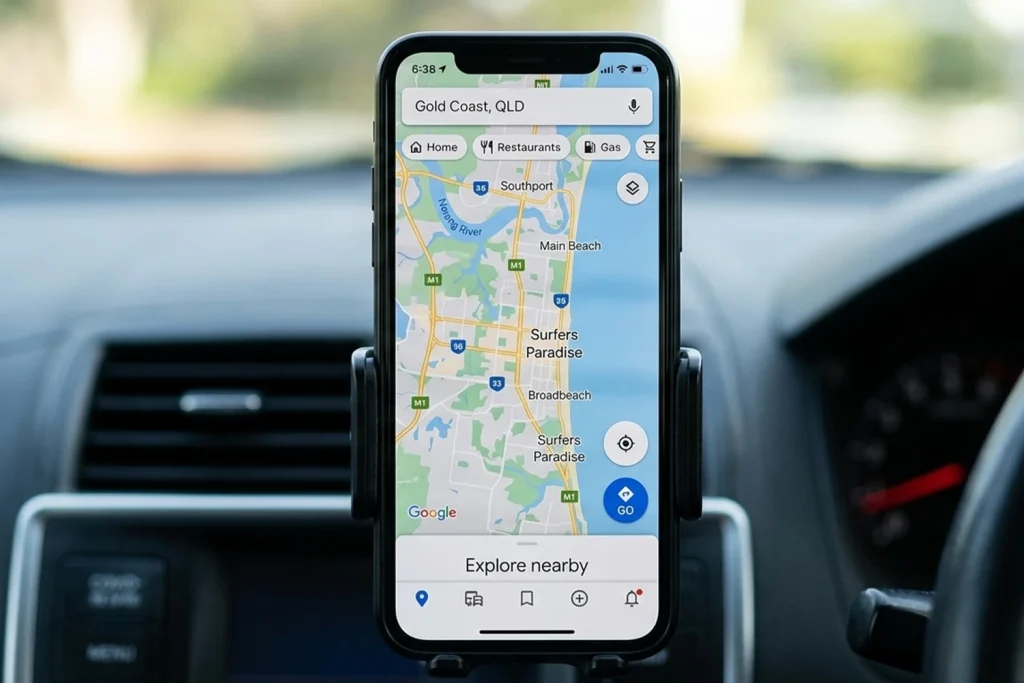
Explore helps users discover businesses, attractions, restaurants and activities around their current location or a selected area.
Recommendations can change based on the user’s location, the time of day and what they are searching for. Someone opening Maps in the morning may see nearby cafés, while an evening search may highlight restaurants, events or entertainment venues.
Users can also search directly for services such as:
Electrician near me
Family dentist Gold Coast
Café open now
Emergency plumber Brisbane
Digital marketing agency Ashmore
This makes accurate business categories, services, opening hours and location information particularly important.
You
The You section brings together saved places, lists, notifications, previous activity and other personalised information.
People can save businesses they plan to visit, create lists for future trips and quickly return to places they have already researched.
Being saved to a list does not guarantee an immediate enquiry. However, it gives your business another chance to remain visible while someone compares their options.
Contribute
The Contribute section allows Google Maps users to write reviews, upload photos, suggest edits, add missing locations and answer questions about places they have visited.
These public contributions can influence how customers perceive a business.
Recent photos can show what a location currently looks like. Reviews can answer questions about service quality, accessibility, wait times and customer experience. User-submitted edits can also change information displayed on a listing, which is why businesses should regularly check their profiles for unexpected changes.
Google continues to moderate reviews and other contributed content to reduce misleading or policy-violating information. However, business owners should still review new activity and report content that appears to breach Google’s policies.
Gemini is changing how people search Google Maps
One of the biggest changes to Google Maps is the introduction of Gemini-powered features.
Google Maps is becoming more conversational through Gemini-powered features such as Ask Maps. Users can now ask detailed questions, receive personalised place recommendations and find specific information about destinations without relying solely on traditional keyword searches. Instead of entering a basic search such as “restaurants near me”, someone may ask:
Where can I take a client for a quiet lunch nearby?
What family activities are available within a 20-minute drive?
Which local businesses are open after 6 pm?
Where can I buy a particular product on the way home?
Which nearby venue has parking and wheelchair access?
Google says its Ask Maps feature can provide recommendations, destination details and answers to follow-up questions. Gemini can also assist during navigation in supported countries and languages.
This changes the way businesses should approach local visibility.
A listing that only contains a business name, address and phone number may not give Google enough context to confidently recommend it for a detailed request. Complete service information, relevant categories, customer reviews, photos and supporting website content can help Google better understand the business.
Google Business Profile remains essential
Your Google Business Profile controls much of the information customers see about your business across Google Search and Maps.
A complete profile can include:
Business name
Primary and additional categories
Address or service area
Phone number
Website
Opening hours
Holiday hours
Products
Services
Photos and videos
Business updates
Customer reviews
Booking or enquiry links
Google states that businesses with complete and accurate information are more likely to appear for relevant local searches.
That does not mean adding keywords everywhere or changing your business name to include a suburb. Your profile should accurately represent the business as it operates in the real world.
Incorrect information, keyword-stuffed names and misleading locations can create a poor customer experience and may place the profile at risk of restrictions or suspension.
How Google determines local rankings
Google explains that local results are mainly based on three factors.
Relevance
Relevance measures how closely a Business Profile matches what the person is searching for.
Selecting the most accurate business categories and adding detailed service information can help Google understand when your business is a suitable result.
Your website also supports this understanding. Individual pages about your main services and locations can provide more context than one general page trying to cover everything.
Distance
Distance considers how far a business is from the location used in the search.
A person standing in Southport may receive different Maps results from someone making the same search in Burleigh Heads.
Businesses cannot optimise their way around every distance calculation. The goal should be to clearly communicate where the business is located or which areas it genuinely services.
Prominence
Prominence reflects how well known and trusted a business appears.
Google may consider information from across the web, including links, articles and business directories. Review quantity and review scores can also contribute to local ranking, while traditional organic SEO signals remain relevant.
A business with an established website, consistent contact information, quality links and genuine customer reviews will generally send stronger trust signals than a listing with little supporting information.
Reviews are about more than star ratings
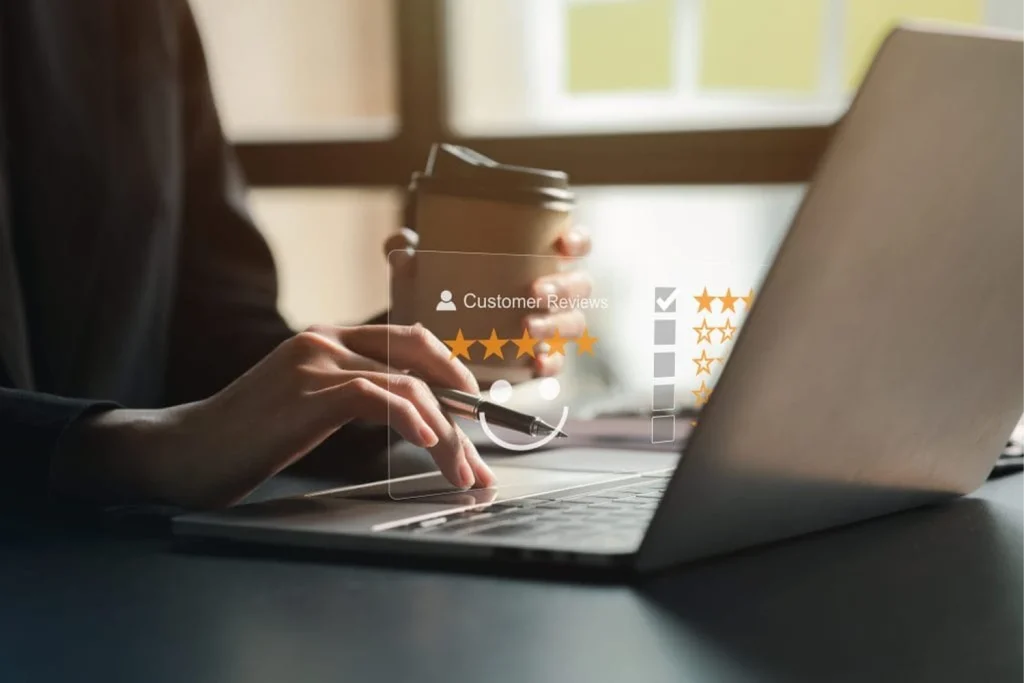
Reviews remain one of the most visible parts of a Google Maps listing.
A high average rating can attract attention, but the written content within reviews can be equally useful. Customers often describe the service they received, the staff member who helped them, their location and the result.
These details help potential customers understand whether the business is suitable for their needs.
Businesses should create a simple and consistent process for requesting reviews from genuine customers. Requests should not offer rewards, discourage negative feedback or selectively target only customers expected to leave five stars.
It is also worth responding to reviews.
A helpful response shows that the business is active and values customer feedback. Responses should sound natural rather than repeating the same template beneath every review.
Photos and videos help customers make decisions
Google Business Profile owners can upload photos and videos showing their premises, team, services, products and completed work. Customers can also contribute their own visual content.
Current images help set expectations before someone visits or makes contact.
For example, a restaurant may show its dining area and menu items, while a builder may share completed renovation projects. A dental practice may show its reception area, treatment rooms and parking access.
Businesses should upload clear, authentic images rather than relying entirely on stock photography.
It is also important to check customer-submitted photos. An outdated image, incorrect photo or irrelevant upload may create confusion even when the rest of the profile is accurate.
Keep business information accurate
Incorrect information can quickly cost a business enquiries.
Customers may choose another result if Maps shows that the business is closed, lists the wrong phone number or sends them to an incorrect location.
Check the following details regularly:
Standard opening hours
Public holiday hours
Business address
Map pin location
Phone number
Website link
Appointment link
Service areas
Business categories
Listed services
Accessibility information
Businesses that relocate, change their name or update their service offering should review both their Business Profile and the information published across their website and external directories.
Consistency makes it easier for customers and search engines to understand which details are correct.
Track how customers find your profile
Verified businesses can access performance information showing how customers discover and interact with their profile across Google Search and Maps.
Available measurements can include searches, profile views and customer actions such as calls, website visits or direction requests.
These figures should be reviewed alongside website analytics, Search Console data, phone tracking and enquiry records.
Profile views alone do not show whether local SEO is producing valuable leads. The more useful question is whether visibility is leading to calls, bookings, store visits and qualified enquiries.
How to improve your Google Maps visibility
Start with the fundamentals.
Make sure your Google Business Profile is verified and uses the correct business name, categories, contact details and location information.
Add every genuine service you want customers to find. Upload recent photos. Request reviews through a compliant process and respond when customers take the time to leave feedback.
Your website should support the profile with clear service pages, useful location information and consistent contact details.
It is also worth checking the listing regularly. Google Maps information can be influenced by business owners, public contributions and information gathered from across the web. A listing should not be treated as something that can be created once and forgotten.
What the latest Google Maps update means for businesses
Google Maps is becoming more conversational, personalised and powered by artificial intelligence.
People are no longer limited to searching for a business name or broad category. They can describe what they need, ask follow-up questions and compare options using information gathered from profiles, reviews, photos and other sources.
For businesses, the opportunity is clear.
Provide accurate information. Explain your services properly. Build a strong review profile. Use genuine images. Maintain a useful website. Keep every part of your local presence consistent.
The businesses that make their information easiest to understand are in a stronger position to appear when nearby customers are ready to call, visit, book or buy.
Media Booth helps Australian businesses improve their visibility across Google Search and Maps through practical local SEO strategies.
Contact our team to discuss how your business can attract more local enquiries.
The article was originally published in February 2020 and has been fully updated. Content current as of July 2026.
Ready to Grow Your Business Online with Media Booth®?
Tell us about your goals, current website and the areas where you need support. Our team will review your enquiry and help you identify the right next steps.
"*" indicates required fields
Turn More Clicks Into
Business Growth
Partner with Media Booth® for practical digital marketing strategies that improve visibility, attract better leads and support measurable long-term growth.